
Walk into a padel shop as a complete beginner and you'll be faced with dozens of rackets that all look roughly the same. Shape, weight, balance point, core material, frame material, they all sound technical, but a few of them make a real difference to how forgiving a racket feels when you're still learning where the ball is going to go.
Shape matters more than anything else
Padel rackets come in three broad shapes: round, teardrop (or hybrid), and diamond. The shape changes where the sweet spot sits and how big it is.
Round rackets have their sweet spot spread across the centre of the face. That means off-centre hits, which happen constantly when you're learning, still come off the racket reasonably well. As the shape moves towards teardrop and then diamond, the sweet spot shrinks and moves higher up the face, which rewards power and spin but punishes mistimed shots far more harshly.
For a first racket, round is almost always the right call. You'll get more consistent contact while you're still developing timing and positioning, and a more forgiving racket means fewer frustrating sessions early on.
Weight and balance point
Lighter rackets with a low balance point (weight concentrated towards the handle rather than the head) are easier to manoeuvre and put far less strain on your arm and shoulder during a long session. A heavier, head-heavy racket can generate more power in the hands of an experienced player, but for a beginner it usually just means the racket arrives late to the ball and your arm tires out faster.
Frame material: fibreglass vs carbon fibre
Fibreglass frames flex slightly more on contact, which softens the feel and makes off-centre hits more forgiving. Carbon fibre is stiffer, transferring more energy straight into the ball, which is why it's the standard choice for advanced, power-focused rackets. As a beginner, that extra stiffness generally works against you: it's less forgiving and can be harder on the arm if your technique isn't fully grooved in yet.
The mistake most beginners make
The most common mistake isn't picking the wrong brand, it's picking a racket built for the player you want to become rather than the player you are right now. A diamond-shaped, carbon-faced racket looks the part, but it will punish the mishits that come with learning the game, which slows progress and makes the sport feel harder than it needs to be.
Our recommendation
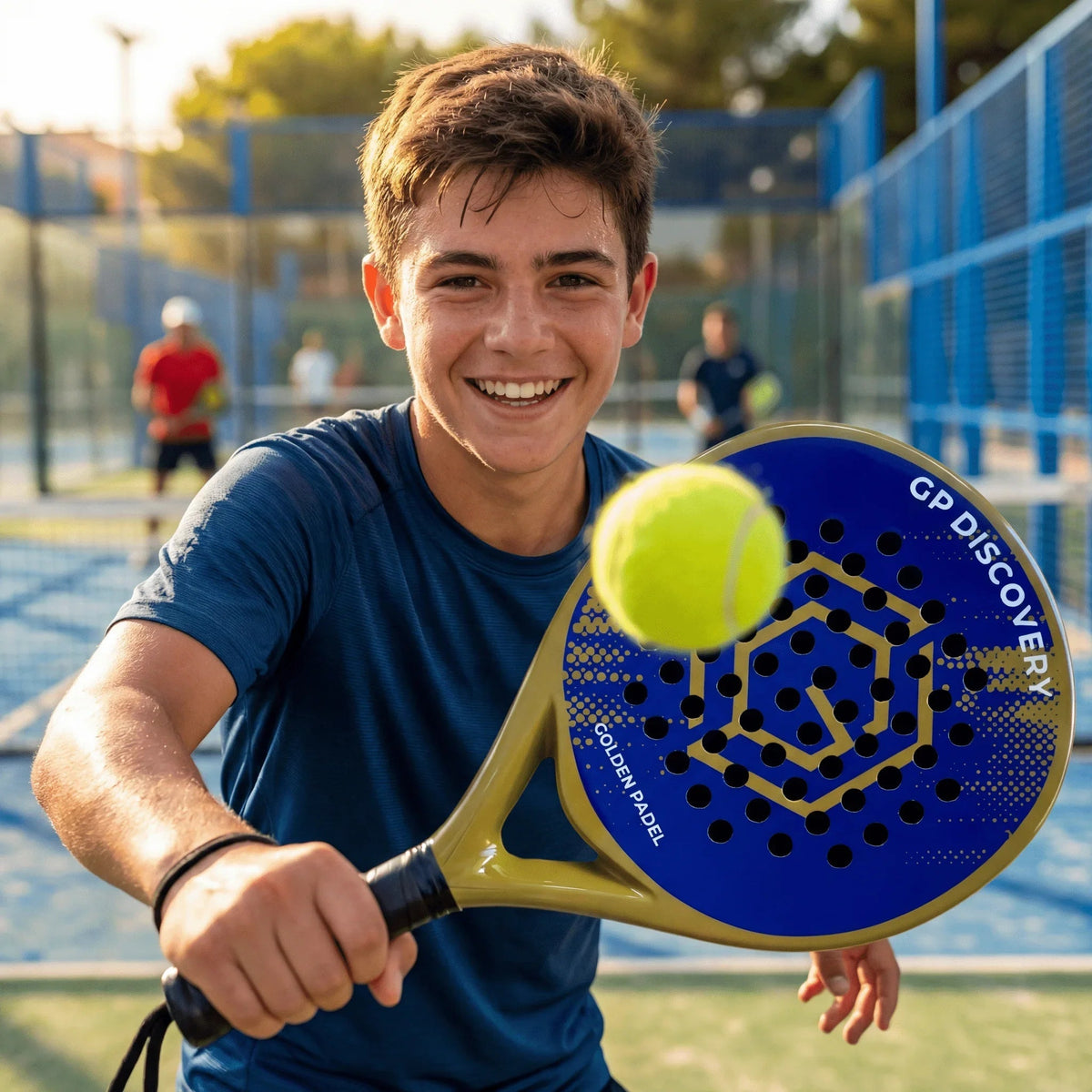
The Golden Padel GP Discovery is built around exactly this brief: a round shape for a bigger, more forgiving hitting area, a carbon fibre frame with a glossy fibreglass surface, a low balance point for easier control, and a weight of 350g to 360g so your arm doesn't tire out mid-session. It's designed and tested at UK padel clubs specifically for players just starting out.
As your technique develops, you can move towards a teardrop or diamond shape with a stiffer, more powerful build, our GP Pro Control is the natural next step for players who've outgrown a beginner racket.
Padel in Britain is governed and promoted by the LTA, and their beginner resources are a good source for the rules and etiquette of the game alongside gear advice like this.

Hinterlasse einen Kommentar
Diese Website ist durch hCaptcha geschützt und es gelten die allgemeinen Geschäftsbedingungen und Datenschutzbestimmungen von hCaptcha.